Who we are
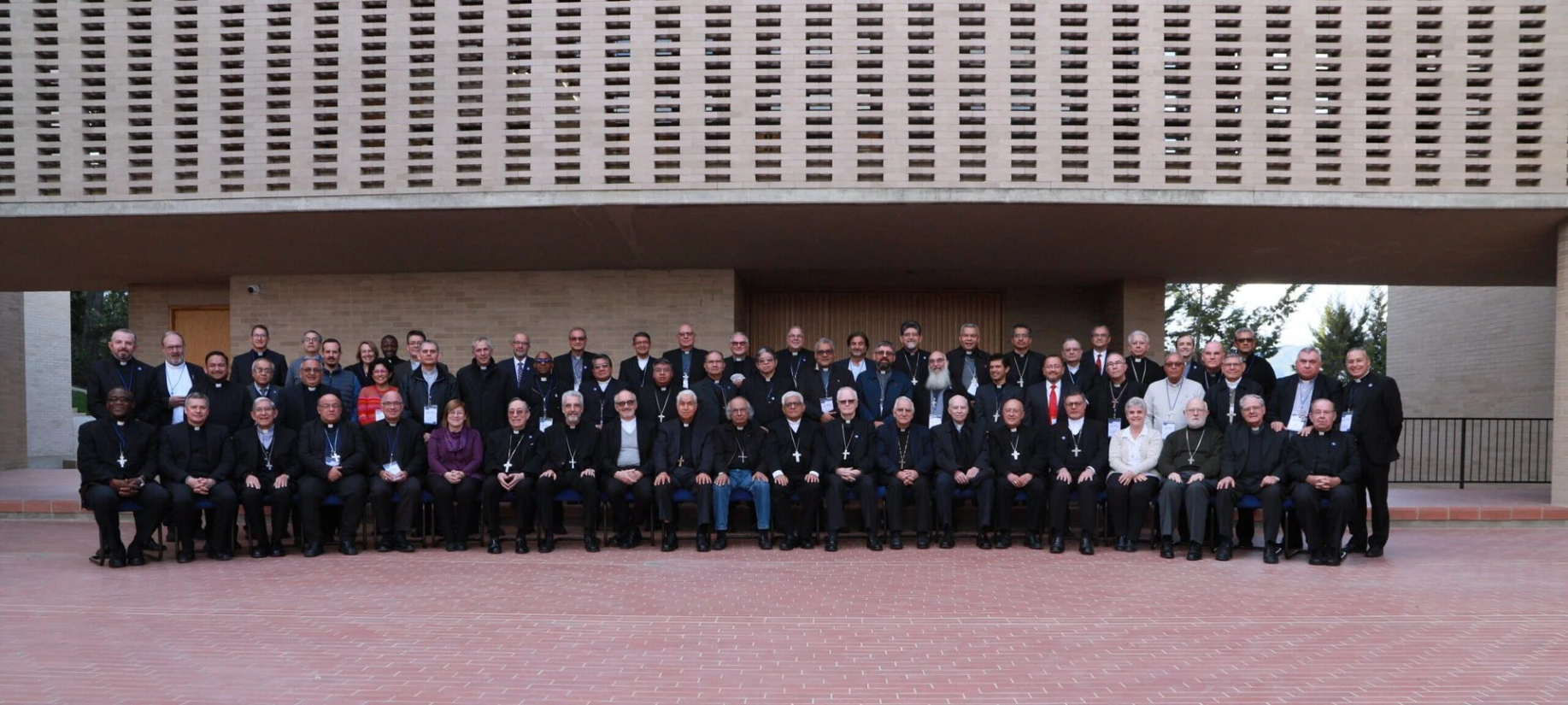
The Latin American Episcopal Council (CELAM) is a body of communion, reflection, collaboration, and service. It was established by the Holy See, at the request of the Latin American episcopate, as a sign and instrument of collegial affection, in perfect communion with the Universal Church and its visible Head, the Roman Pontiff.
As a service organization, CELAM must primarily be a source of encouragement and assistance for the reflection and pastoral action of the Church in Latin America and the Caribbean.
CELAM coordinates its activities with the regional episcopal bodies of Latin America and the Caribbean that exist or may exist in the future. It is governed by its own statutes and corresponding regulations and by the provisions issued by the Holy See.
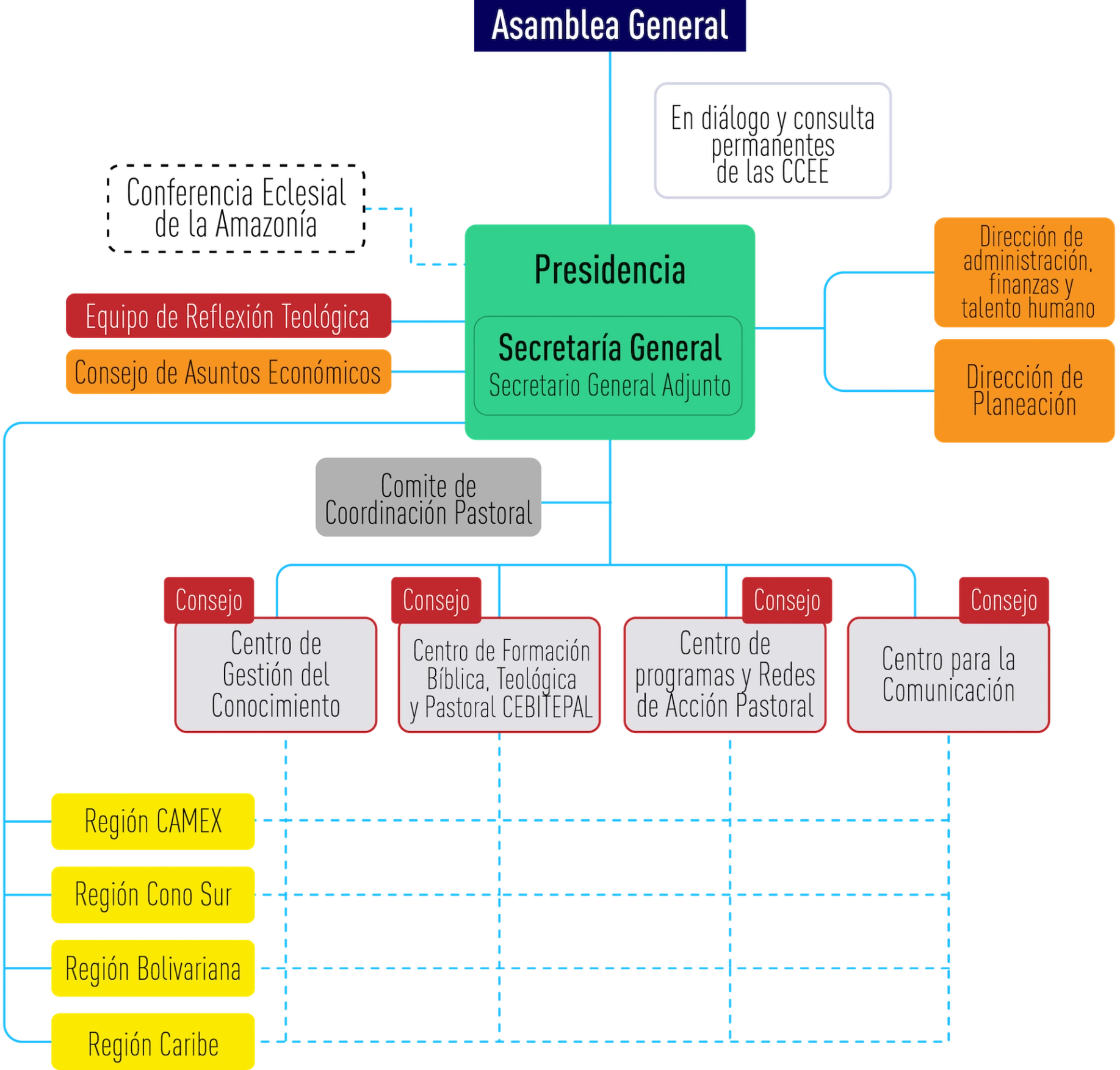
Organizational chart
History
The Latin American Episcopal Council (CELAM) was founded in 1955 by Pope Pius XII. It was a response to a request made by the Latin American episcopate as part of the proposals from the First General Conference, held in Rio de Janeiro. Since its inception, it has fostered fraternal cooperation among bishops, creating a space for communion and providing pastoral support to the Episcopal Conferences. Its creation was the fruit of a process of maturation within the Church in Latin America and the Caribbean and reflects a living experience of collegiality in the region.
Over the course of more than six decades, CELAM has fostered the values of communion, fraternity, collegiality, dialogue, service, reflection, and exchange—values that have enriched the continent's episcopate and the entire People of God. True to its nature and mission, CELAM has dedicated itself to embracing the directives of the Second Vatican Council. These directives have shaped the course of the five General Conferences of the Latin American Episcopate, serving as true milestones in its history and as a source of inspiration for the plans and programs developed to serve the Episcopal Conferences of Latin America and the Caribbean. In this way, ecclesial communion and the collegial spirit among the continent's bishops have been promoted, in perfect communion with the Bishop of Rome.